
Site assessment
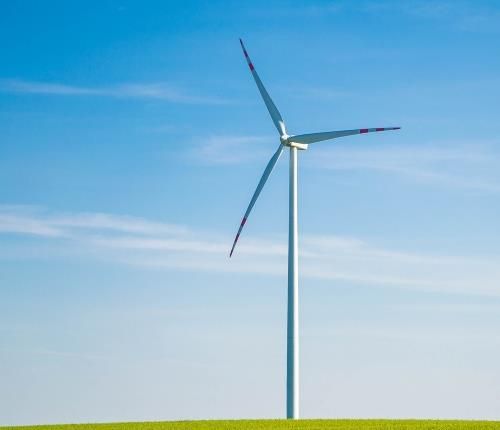
The accredited wind and energy yield assessment studies of anemos provide a reliable basis at all times during your wind farm planning.
Whether you opt for a preliminary assessment at the early stage of planning or for a bankable wind and yield report to finance your wind farm, the long-term experience of anemos promises a high quality of the wind and yield calculation.
anemos also calculates possible yield losses due to environmental restrictions with the most reliability since we use site-specific time series for your location.
Site assessment studies are performed with a range of models from the simple program WAsP to the CFD called Meteodyn and the mesoscale model WRF, which is used to create the anemos wind atlases.
Energy yield calculation
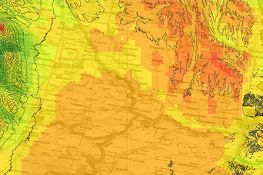
We accompany your project from the first energy yield estimation to wind measurements up to the final bankable wind study as a basis for your financial considerations. Depending on the site-specific characteristics, anemos has the possibility of using different kinds of flow models for energy yield calculations to reasonably simulate the wind conditions at your site. For sites in complex terrain we use CFD simulations.
Whether for the long-term correlation of wind measurements or energy yield data of reference turbines or to drive the flow models - the data of our wind atlases are applied in every wind study as additional information. Hereby, we reach the high accuracy of our energy yield calculations.
The reports are prepared according to the Technical Guideline TR 6 which defines the high-quality standards of German site assessment studies and according to the international IEC guidelines.
If your first estimate does not need to comply with TR 6, the initial estimation based on wind atlases is sufficient.
CFD simulation
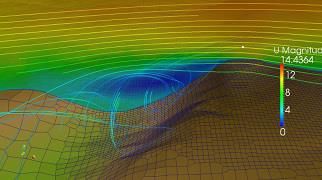
Estimating the wind conditions over complex terrain is a big challenge. anemos operates the CFD (Computational Fluid Dynamics) model Meteodyn WT which is especially developed to calculate the flow over complex terrain.
To provide site assessment studies with such a complex model in reasonable time, the anemos company operates high-performance computers, that are able to perform these complex computations within an adequate time frame.
- application in complex terrain
- high resolution up to 25m
- advanced modelling of forest canopies
- integration of different atmospheric stability classes
- advanced modelling of atmospheric turbulence
Determination of site quality for commissioning
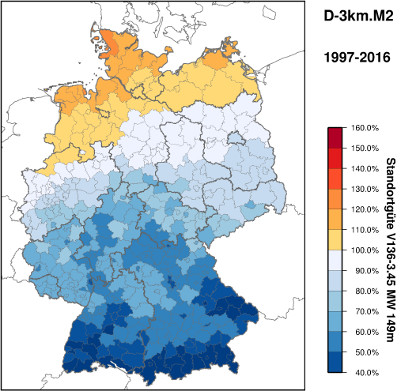
According to the EEG 2017, the quality of the wind turbine sites which are approved after 1.1.2017 and are not subject to exceptions, must be determined for commissioning and verified after 5, 10 and 15 years. The site quality index is the ratio of the turbine-specific energy yield, taking into account certain losses (site energy yield) and the reference yield of the corresponding WTG type.
The site energy yield for commissioning is equal to the gross energy yield minus loss factors. These include wake losses, losses due to technical unavailability, electrical efficiency losses and losses due to environmental restrictions. The 10-minute time series of the anemos Wind Atlas are particularly valuable for these losses.
The site quality index has to be proved by an accredited expert according to the guidelines of the FGW (Association for Wind Energy and other Renewable Energies). anemos is one of the first companies accredited for the determination of the site quality index for commissioning.
anemos has actively participated in the discussion and the formulation of the corresponding guidelines. The determination of site quality index for commissioning is based on a site assessment study. We also carry out the determination of site quality after commissioning after 5, 10 and 15 operating years.
Moreover, we create maps of site quality index (Germany) with the highest possible spatial resolution.
Offshore
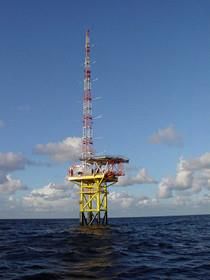
The offshore wind field may exhibit a strong spatial variation which cannot be adequately considered with a simple extrapolation of the wind potential from coastal weather stations or offshore measurement locations. For the horizontal and vertical extrapolation and for the deduction of an offshore wind index, we apply our complex 3-dimensional atmospheric models. A parameterization of the roughness depending on the sea conditions is taken into account as well as the atmospheric stability which influences the vertical wind profile changing with the temperature layering and the diurnal and annual courses of temperature above sea or land surfaces.
Our offshore wind atlases are correlated with the measurements at the FINO platforms in the North and Baltic Sea. This way, we obtain a detailed 3-dimensional picture of the wind field above sea, adapted to the measurements. These long-term time series are then applied to determine a wind index.
For the energy yield calculation, we use several different wake models to obtain a low uncertainty.
The offshore wind potential studies / site assessment studies of anemos meet the common MetOcean data requirements. Our long-standing expertise regarding offshore projects is reflected by the amount of site assessment studies and due diligence reports for more than 35 offshore wind farms with more than 14.000 MW.
Calculation of yield losses
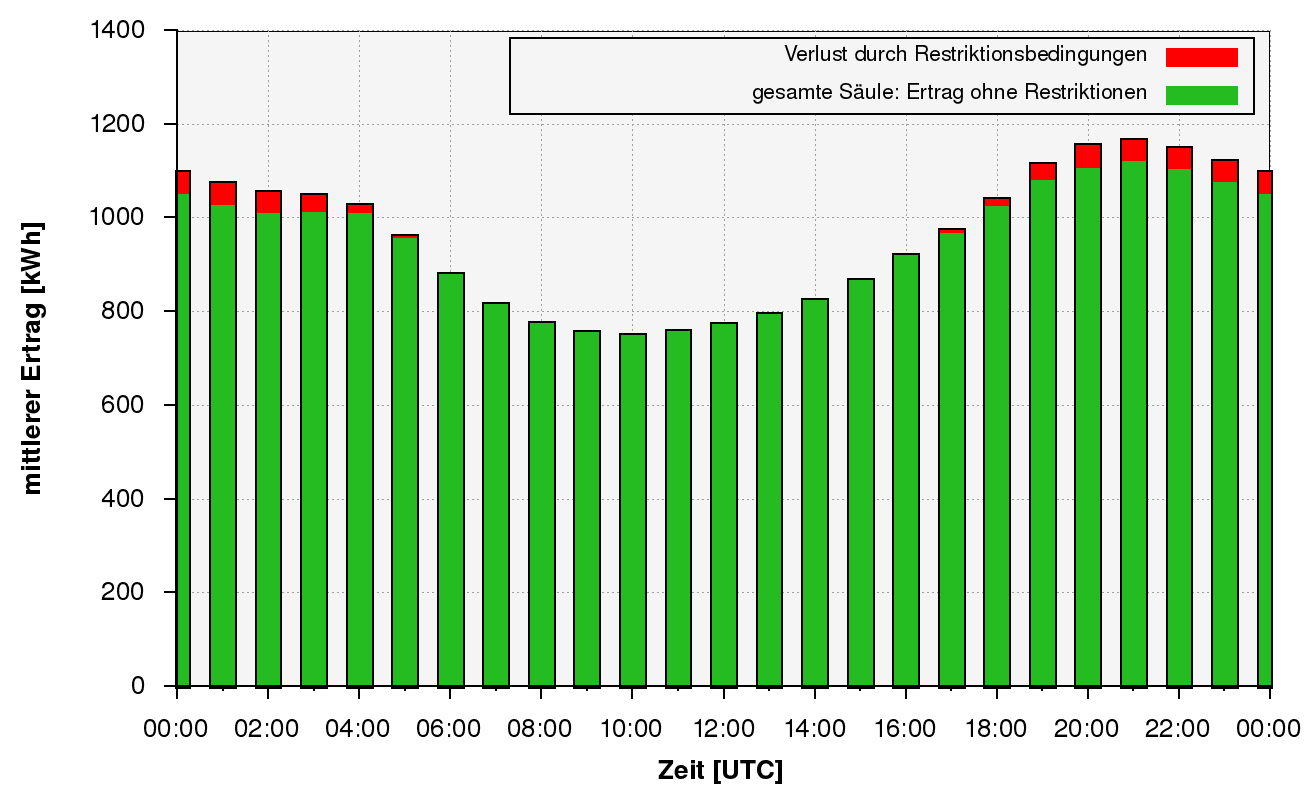
The calculation of losses is a major part within a wind and energy yield study. In addition to daily shutdowns and curtailments, annual and weather related restrictions are required for the licensing.
anemos is using high-resolution 10-minute data of the anemos Wind Atlases to calculate the energy losses. These data consist of 20 years of site-specific meteorological data providing information about the wind potential and energy yield. An accurate prediction of the losses for the future operation time can be achieved. Various restrictions may occur at the same time. Our time series analysis guarantees the consideration of simultaneous restriction events to avoid double rating.
Examples of possible restrictions are:
- shutdowns and curtailments due to noise issues
- shutdowns to avoid shadow impact
- shutdowns to protect the avifauna (i.e. bats, cranes, breeding seasons, etc.)
- sector management to reduce mechanical loads
- shutdowns due to ice accumulation
Calculation of noise immission
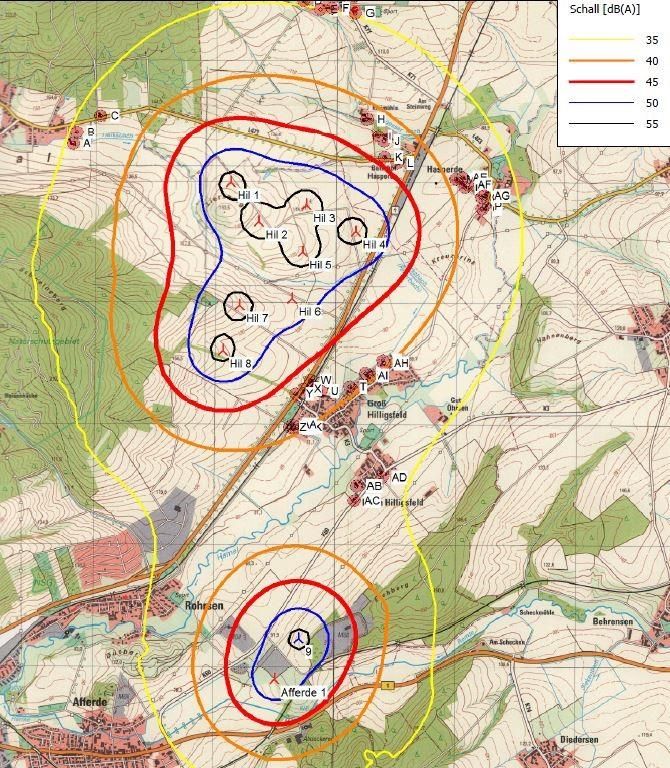
Licensing procedures for wind turbines are based on reports about the calculation of noise immission.
We calculate the noise immission using the module NOISE of the program package WindPRO by EMD International A/S according to the DIN ISO 9613-2 of the “Deutsches Institut für Normung e.V.” and according to the "TA Lärm" as amended from time to time. The corresponding yield is calculated by reducing time-dependent adaptation of the performance characteristic.
During the preparation of a noise immission report, we are in direct exchange with the licensing authorities.
Calculation of shadow impact
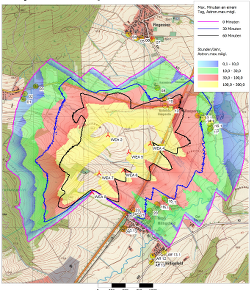
Licensing procedures for wind turbines are based on reports about the calculation of noise immission.
We calculate the noise immission using the module NOISE of the program package WindPRO by EMD International A/S according to the DIN ISO 9613-2 of the “Deutsches Institut für Normung e.V.” and the “Hinweise der Bund/Länder-Arbeitsgemeinschaft Immissionsschutz (LAI)”, as of 30.05.2016 and the demanded interim procedure for noise propagation calculation of the “NALS”, version 2015-05.1, respectively and according to the "TA Lärm" (1998). State specific regulations are considered if necessary. The corresponding yield is calculated by reducing time-dependent adaptation of the performance characteristic.
During the preparation of a noise immission report, we are in direct exchange with the licensing authorities.
Risk analysis
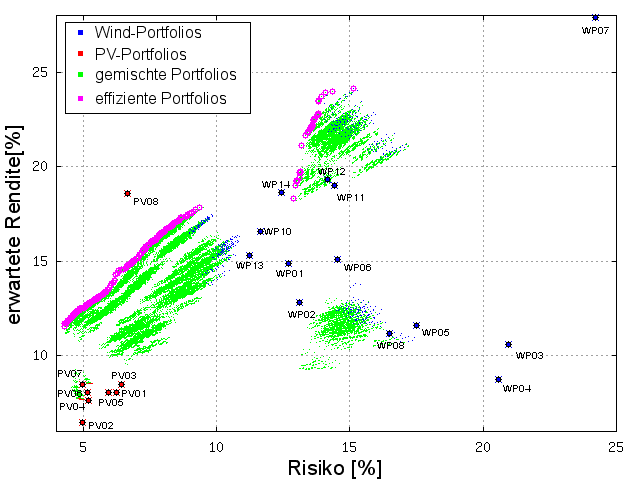
The risk of investing in a wind farm project is basically determined by the energy yield calculations and the corresponding uncertainty. The uncertainty consideration in a site assessment study usually refers to the applied methods and data base. Apart from these rather technical uncertainties, a comprehensive risk analysis should include the uncertainty of the natural wind variations from year to year.
We perform an analysis of the volatility of the wind based on our long-term time series of the anemos Wind Atlases.
Furthermore, we are able to analyse and optimise wind park or PV-portfolio with the calculation of the energy yield portfolio effect. In addition to the technical diversification, the spatial diversification must be taken into account.
Small wind turbines
We generate a yield estimation for the location of your small wind turbines, based on our anemos D-3km Atlas.
It is also possible to determine the wind potential on the basis of your wind measurement.
Your contact persons

Lasse Blanke
Managing director
Tel.: +49 (0)4131 8308 - 0
lasse.blanke@anemos.de

Julia Blanke
Dipl. Meteorologist
Tel.: +49 (0)4131 8308 - 120
julia.blanke@anemos.de

Andree Nather
M.Sc. Meteorology
Tel.: +49 (0)4131 8308 - 113
andree.nather@anemos.de

Niklas Bauer
B.Sc. Agricultural Science
Tel.: +49 (0)4131 8308 - 116
niklas.bauer@anemos.de

Dr. Franziska Leverenz
M.Sc. Ocean and Climate Physics
Tel.: +49 (0)4131 8308 - 122
franziska.leverenz@anemos.de

Dr. Claire Siddiqui
M.Sc. Physical Geography
Tel.: +49 (0)4131 8308 - 123
claire.siddiqui@anemos.de

Thorben Busch
M.Sc. Meteorology
Tel.: +49 (0)4131 8308 - 117
thorben.busch@anemos.de

Anna Lensch
M.Sc. Meteorology
Tel.: +49 (0)4131 8308 - 115
anna.lensch@anemos.de
Your contacts
-
Lasse Blanke
Managing director
Tel.: +49 (0)4131 8308 - 0
lasse.blanke@anemos.de -
Julia Blanke
Dipl. Meteorologist
Tel.: +49 (0)4131 8308 - 120
julia.blanke@anemos.de -

André Glücksmann
Head of IT / Operational Site Quality
Tel.: +49 (0)4131 8308 - 0
andre.gluecksmann@anemos.de -

Martin Schneider
Managing director
Tel.: +49 (0)4131 8308 - 0
martin.schneider@anemos.de -

Krischan Lingel
M.Sc. Environmental engineering
Tel.: +49 (0)4131 8308 - 114
krischan.lingel@anemos.de -
Andree Nather
M.Sc. Meteorology
Tel.: +49 (0)4131 8308 - 113
andree.nather@anemos.de -

Dr. Gabriel Wolf
Dipl. Meteorologist
Tel.: +49 (0)4131 8308 - 106
gabriel.wolf@anemos.de -

Julian Ohl
M.Sc. Environment and Natural Resources
Tel.: +49 (0)4131 8308 - 104
julian.ohl@anemos.de -

Ignacio Martin Santos
M.Sc. Meteorology
Tel.: +49 (0)4131 8308 - 107
ignacio.martin-santos@anemos.de -
Niklas Bauer
B.Sc. Agricultural Science
Tel.: +49 (0)4131 8308 - 116
niklas.bauer@anemos.de -
Dr. Franziska Leverenz
M.Sc. Ocean and Climate Physics
Tel.: +49 (0)4131 8308 - 122
franziska.leverenz@anemos.de -
Dr. Claire Siddiqui
M.Sc. Physical Geography
Tel.: +49 (0)4131 8308 - 123
claire.siddiqui@anemos.de -
Thorben Busch
M.Sc. Meteorology
Tel.: +49 (0)4131 8308 - 117
thorben.busch@anemos.de -
Anna Lensch
M.Sc. Meteorology
Tel.: +49 (0)4131 8308 - 115
anna.lensch@anemos.de -

Philine Podein
M.Sc. Meteorology
Tel.: +49 (0)4131 8308 - 144
philine.podein@anemos.de -

Max Weißenborn
M.Sc. Environmental Sciences
Tel.: +49 (0)4131 8308 - 126
max.weissenborn@anemos.de -

Dr. Anna Siems
M.Sc. Marine environmental sciences
Tel.: +49 (0)4131 8308 - 135
anna.siems@anemos.de -

Regina Keller
M.Sc. Climate Physics: Meteorology and Physical Oceanography
Tel.: +49 (0)4131 8308 - 148
regina.keller@anemos.de -

Dr. Ing. Alexander Clement
M.Sc. Biomedical Engineering
Tel.: +49 (0)4131 8308 - 150
alexander.clement@anemos.de -
anemos head office
General enquiries
Tel.: +49 4131 8308 - 0
kontakt@anemos.de